
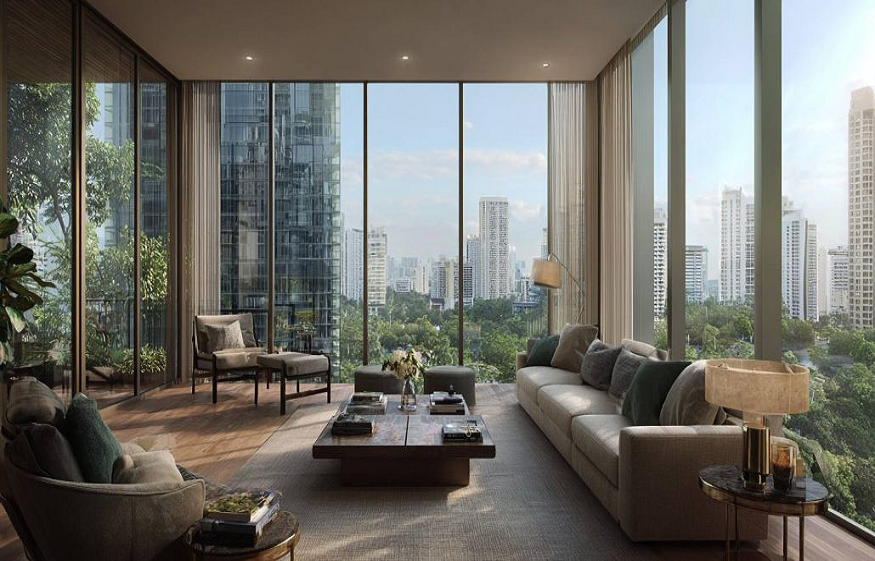
The city living planning is more inclined to the livability as opposed to density. Designers have become conscious about ways in which homes can contribute to routine aspects, emotional health and comfort in the long run. The emerging trends like Tengah Garden Residences and Promenade Peak are indicative of these concerns since they focus on effective designs, environmental consciousness and community inculcation in expanding urban settings.
Smarter Use of Limited Space
The key to modern residential planning is the efficient use of space. The houses will be made in such a way that they are open yet small and efficient. Tengah Garden Residences is an example of how sensitive zoning and versatile interiors minimise those spaces which go to waste. These strategies enable the residents to have flexible living units that can be adjusted to work, sleep, and social requirements.
Vertical Living with Enhanced Flow.
The Promenade Peak is the reflection of the residential buildings since they could remain comfortable with transparent circulation and proportions. The availability of efficient points of access and organised common areas will minimise congestion, and residents will flow through the buildings without any point of congestion or intrusion because people need Privacy in their own units.
Sustainability Influencing Comfort at Home.
The environment planning currently contributes significantly to the housing planning of cities. The natural lighting, air movement and economical materials enhance comfort and minimise energy consumption. Tengah Garden Residences emphasises how sustainability helps people to have more healthy interiors and live in a more peaceful environment. Such design features are advantageous to residents because of their ability to provide stable, breathable environments in high-density urban environments.
Facilities that serve everyday life.
Contemporary residential projects are planned with facilities that are focused on day-to-day lifestyle and not just luxury. The Promenade Peak is no exception to the trend, as we can find shared space, which is not limited to the individual homes.
- Shared lounges are favourable for work and relaxation.
- Flexible rooms are versatile for several activities.
- Open spaces decrease the crowding in the interiors.
Community-Centred Planning Methods.
Social balance and connection are becoming a factor in residential planning. Tengah Garden Residences is mirrored in the form of shared areas where interaction is not imposed.
- Casual sitting encourages communication.
- Internal walking paths make people active.
- Neighbourhood identity is constructed in community areas.
Balanced Privacy and connectivity.
Planning of the future residential is a balance of accessibility and residential serenity. The close access to the transport and services will decrease the everyday stress, whereas Privacy is necessary. Promenade Peak is an example of how careful orientation and buffering can be used to shield interiors against noise and visual bombardment to enable residents have the comfort of city life without the constant distraction.
Common Facilities Enhancing Productivity.
The centralised infrastructure is beneficial to residential developments by making them work more effectively. Promenade Peak illustrates the duplication curbing between units in the process of sharing facilities. People have the advantage of being able to access the services with smaller houses, which are efficient in terms of land use and do not affect the comfort or functionality of the living conditions in crowded urban areas.
Conclusion
The trends in residential planning are more long-term planning. The evolution of urban life can be positively shown by such developments as Tengah Garden Residences and Promenade Peak that combine efficient layouts, sustainability, and a focus on the community. Such strategies guarantee the suitability of future city housing in order to sustain good living and react to the current population increase.